
Choosing the right road marking equipment affects visibility, productivity, and long-term maintenance. It also influences how safely crews work beside moving traffic. This guide examines ten widely used equipment types, from compact hand-guided machines to truck-mounted systems designed for highways and large sites.
Each machine suits different conditions. Airless spray machines can apply sharp lines quickly, while thermoplastic applicators handle heated, durable materials. Screed systems create thicker markings, often useful at crossings and high-wear areas. Preformed tape applicators support clean symbols and temporary layouts. Walk-behind units offer control around parking bays, warehouses, and narrow streets. Small details matter.
Reliable selection requires more than comparing prices. Surface texture, line width, material temperature, drying time, storage needs, and operator training all deserve attention. Manufacturer instructions and local road authority specifications should guide final decisions. A machine that performs well on smooth asphalt may struggle on rough concrete. The surface decides.
The discussion also considers bead dispensers, plural-component systems, robotic or semi-automated solutions, and specialized equipment for airport or industrial markings. Their benefits are practical, but not universal. Automation may improve consistency, yet setup errors can still produce weak lines or uneven coverage. That point is easy to overlook. Real performance depends on calibration, weather, maintenance, and disciplined application.
By comparing operating methods, strengths, limitations, and typical use cases, this overview helps contractors, facility managers, and purchasing teams make informed choices. It does not treat one machine as the perfect answer. Good road marking equipment is the equipment matched carefully to the surface, material, project scale, and people using it.
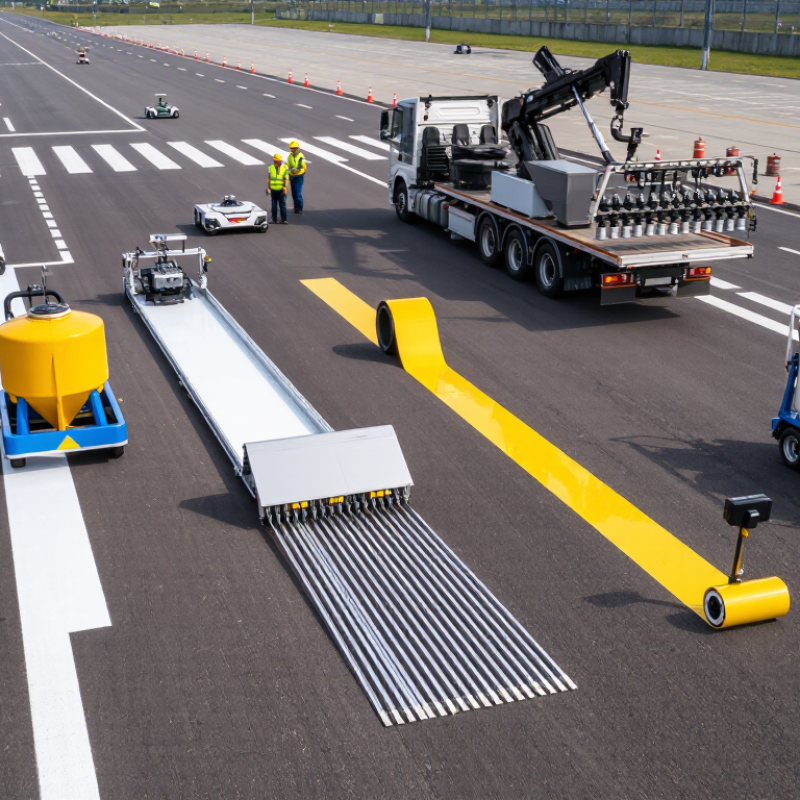
Road marking equipment applies visible, durable guidance to pavement. It supports lane control, pedestrian safety, parking management, and work-zone awareness. The World Health Organization’s Global Status Report on Road Safety 2023 records about 1.19 million annual road deaths worldwide. Clear markings cannot solve every risk, but they help drivers interpret road space faster. Small details matter.
Road marking equipment is commonly classified by application method, mobility, and material. The top ten types include hand-push machines, ride-on machines, truck-mounted systems, spray applicators, thermoplastic extrusion machines, thermoplastic screed machines, two-component cold-plastic applicators, preformed-tape applicators, shot-blasting machines, and marking-removal machines.
Spray systems suit fast coverage. Extrusion systems create thicker lines. Preformed materials support precise symbols. Removal machines prepare worn surfaces. The FHWA’s Manual on Uniform Traffic Control Devices, 11th Edition, links marking design with visibility, road function, and traffic control requirements.
Selection depends on road width, material temperature, line thickness, surface texture, and daily output. A contractor should inspect the pavement before choosing equipment. Dust, moisture, and oil can weaken adhesion. In field work, operators often underestimate cleaning time. That is a practical mistake. Larger machines may improve productivity, yet they can struggle near junctions, curves, and narrow shoulders. Equipment classification is useful, but it is not perfectly clean. A machine’s real value appears through consistent line edges, controlled thickness, accurate glass-bead placement, and safe maintenance records.
Road marking equipment works by controlling material, pressure, heat, and movement. A hand-push line marker uses a simple pump or gravity feed for short repairs. A walk-behind spray machine atomizes paint through a nozzle, creating narrow, even lines. Ride-on markers carry larger tanks and maintain steady speed over parking areas or wide roads. Truck-mounted systems use hydraulic controls for long centerlines, edge lines, and repeated lane patterns. Their main advantage is consistent output, not merely speed.
Thermoplastic preheaters melt solid material inside a heated tank before application. A screed applicator spreads the hot mixture through a shaped shoe, leaving a thick, durable profile. An extrusion machine forces thermoplastic through a die, which produces raised lines or textured markings. Cold plastic plural-component equipment combines reactive materials at the spray head, allowing fast curing without external heat. A glass bead dispenser drops reflective beads onto wet paint or plastic, improving night visibility. A road stud applicator positions reflective studs with adhesive or heated material, helping drivers read curves and lane boundaries.
Small details matter. Clean nozzles prevent ragged edges. Correct bead timing prevents weak reflection. Operators must check surface moisture, temperature, and traffic protection before work begins. In field use, speed settings often need adjustment near joints, drains, or patched asphalt. No machine fixes poor preparation. The equipment list is not perfectly universal; local weather and marking material change the best choice. Even experienced crews sometimes learn this the hard way.
How the top equipment types work, compared by their typical operating speed in road-marking applications.
Operating speeds are industry-typical planning values and vary with material, road condition, line width, traffic control, curing time, and marking complexity. Hand-push machines are maneuverable for small jobs, while truck-mounted and spray systems are designed for higher productivity. Screed and extrusion systems place thermoplastic material precisely, and plural-component systems apply durable two-part markings.
Road marking equipment should match road width, material, traffic load, and working speed. A 2024 MarketsandMarkets assessment projects the road-marking materials market to grow at roughly 5% annually through 2029. That growth reflects demand for durable, visible markings. Application matters more than machine size.
For urban repairs, hand-push paint stripers offer control around crossings and narrow lanes. Walk-behind thermoplastic applicators suit short, durable lines. Ride-on stripers improve output on parking areas and airports. Truck-mounted line markers serve long highway sections. Airless spray machines create fast, even paint films. Screed applicators place thicker thermoplastic layers. Two-component cold-plastic machines support textured, high-wear markings. Bead dispensers improve nighttime visibility. Preheaters and melting kettles prepare thermoplastic consistently. Grinders and shot blasters remove failed markings before recoating.
Performance is usually judged through transfer rate, line thickness, drying time, and retroreflectivity. The Federal Highway Administration measures retroreflectivity in millicandelas per square metre per lux. That detail matters beside wet roads and headlights. A poorly calibrated bead dispenser can waste material and reduce visibility. It happens.
In practical work, ride-on systems often save labor, but they can overrun tight corners. Hand-push units move slower, yet they give better control near drains and curb edges. MarketsandMarkets also identifies thermoplastic systems as a major growth segment, but heat management remains a weakness. Wind, surface moisture, and uneven pavement still disrupt results. No machine fixes poor preparation.
What Are the Top 10 Road Marking Equipment Types?
Selecting road marking equipment starts with the surface, not the machine. Asphalt, concrete, and recently repaired pavement absorb materials differently. A short test area can reveal poor adhesion, uneven edges, or slow drying. Never skip it.
For small repairs, a hand-guided airless sprayer offers control around junctions and narrow lanes. Larger roads may need ride-on or self-propelled machines to maintain steady speed. Thermoplastic applicators suit durable lines, while cold paint sprayers support faster, simpler work. Two-component systems provide strong performance where traffic is heavy. Preformed tape works well for symbols, arrows, and short-term layouts. Manual rollers, screed boxes, bead dispensers, and line grinders complete the common equipment list.
Match the machine to line width, material temperature, traffic pressure, and daily output. Check whether the equipment can hold a stable flow when the operator slows down. Uneven speed often creates thick starts and thin finishes. That detail is easy to miss. For reflective markings, confirm that glass beads feed consistently and remain embedded at the correct depth. On steep roads, braking control and machine balance matter more than top speed. In dusty conditions, cleaning access becomes essential.
A careful contractor also checks spare seals, nozzle sizes, heating controls, and calibration records. Cheap maintenance can become expensive downtime. I would test two settings before approving production. No chart replaces a trial strip. Weather may change the result. A sound choice combines technical data, operator experience, and measured performance on the actual project.
| No. | Equipment Type | Common Marking Material | Operating Method | Typical Line-Width Range | Typical Productivity | Best-Suited Surfaces | Main Advantages | Key Limitations | Recommended Project Use |
|---|---|---|---|---|---|---|---|---|---|
| 1 | Airless Line Striper | Water-based paint Solvent-based paint | Walk-behind or ride-on; high-pressure spray without compressed air | Approximately 5–60 cm, depending on tip and setup | About 1,000–4,000 m² per working day under normal site conditions | Asphalt, concrete, parking areas, urban roads | Sharp line definition, efficient paint transfer, adjustable pressure, suitable for many line layouts | Requires correct pressure and nozzle selection; overspray control is important; paint must be compatible with the pump | Road centerlines, edge lines, parking lots, intersections, and general maintenance work |
| 2 | Thermoplastic Road Marking Machine | Hot-melt thermoplastic | Push, self-propelled, or truck-mounted; material is heated before application | Approximately 5–60 cm for common lines | About 500–2,000 m² per working day, depending on heating and layout requirements | Asphalt and prepared concrete surfaces | Thick, durable markings; good visibility; glass beads can be embedded during application | Needs a safe heating system, temperature control, and trained operators; slower startup than paint equipment | High-traffic highways, urban arterials, crosswalks, arrows, symbols, and long-life markings |
| 3 | Two-Component Cold Plastic Applicator | MMA cold plastic Two-component resin | Manual, extrusion, spray, or screed application with component mixing | Approximately 5–100 cm, including textured and profile markings | About 300–1,500 m² per working day, depending on curing time and pattern | Asphalt, concrete, and heavily trafficked paved areas | High durability, strong chemical and abrasion resistance, suitable for thick or structured markings | Higher material cost; mixing ratio and application timing must be carefully controlled | Bus lanes, intersections, cycle lanes, pedestrian zones, symbols, and high-wear locations |
| 4 | Cold Paint Line Marking Machine | Water-based paint Solvent-based paint | Manual or self-propelled spray application, commonly using airless or low-pressure systems | Approximately 5–50 cm | About 800–3,000 m² per working day | Asphalt, concrete, factory floors, parking surfaces | Lower entry cost, simple color changes, fast setup, and broad availability of paint materials | Shorter service life than thermoplastic or cold plastic in heavy traffic; drying is affected by weather | Parking lots, temporary traffic changes, local roads, warehouses, and routine repainting |
| 5 | Ride-On Road Marking Machine | Paint Thermoplastic Cold plastic | Operator-controlled seated machine with one or more marking systems | Approximately 5–100 cm, depending on configuration | About 2,000–8,000 m² per working day on large, open sites | Wide roads, airports, large parking areas, industrial pavements | Reduces operator fatigue, supports long straight lines, and can carry larger material tanks | Higher purchase and transport cost; less convenient in narrow or congested areas | Large-scale road rehabilitation, airport aprons, logistics yards, and extensive parking projects |
| 6 | Truck-Mounted Road Marking System | Paint Thermoplastic Cold plastic | Marking modules installed on a truck with hydraulic, pneumatic, or electronic controls | Approximately 10–100 cm; multiple lines can be applied in one pass | About 5–20 lane-km per working day, depending on traffic control and line design | Highways, expressways, long rural roads, and major arterial routes | High travel speed, large material capacity, strong productivity, and good support for multi-line layouts | Large capital investment; requires a suitable carrier vehicle, traffic management, and experienced crew | Long-distance centerlines, edge lines, rumble-strip interfaces, and high-volume highway programs |
| 7 | Extrusion Screed Marking Machine | Thermoplastic Cold plastic | Material is deposited through a die or screed at a controlled thickness | Approximately 5–100 cm, with thickness commonly controlled for durable markings | About 300–1,500 m² per working day | Asphalt and concrete with suitable surface preparation | Produces thick, consistent lines; suitable for profiled, ribbed, and high-build markings | Less flexible for frequent width changes; requires accurate temperature, flow, and surface control | Durable edge lines, raised profiles, textured markings, and projects requiring enhanced wet-night visibility |
| 8 | Spray Thermoplastic Machine | Spray thermoplastic | Heated thermoplastic is atomized and sprayed onto the pavement | Approximately 5–50 cm | About 1,000–4,000 m² per working day, depending on heating capacity and line design | Asphalt and prepared concrete | Faster application than some screed systems, smooth finish, and effective for thin or medium-build lines | Requires stable heating and spray control; wind and overspray can affect application quality | High-volume line work, urban roads, airport markings, and projects requiring a smooth thermoplastic finish |
| 9 | Preformed Tape Applicator | Preformed thermoplastic tape Reflective pavement marking tape | Roll or sheet material is positioned and bonded by pressure, heat, or adhesive | Commonly 5–30 cm for lines; sheets support symbols and legends | About 100–800 m² per working day, depending on pattern complexity | Clean, dry asphalt and concrete with suitable surface preparation | Very fast installation for symbols and short sections; consistent factory-made shapes and thickness | Material cost is relatively high; surface cleanliness, temperature, and bonding conditions are critical | Crosswalks, arrows, stop bars, legends, temporary markings, and small-area repairs |
| 10 | Handheld or Robotic Marking System | Paint Cold plastic Specialty coatings | Hand-guided, battery-powered, or semi-automated positioning system | Approximately 3–30 cm for lines; templates support small symbols | About 100–800 m² per working day, depending on accuracy requirements | Parking areas, warehouses, sports courts, pathways, and confined pavement zones | Compact, maneuverable, easy to transport, and suitable for detailed layouts or restricted access | Lower capacity and slower coverage than ride-on or truck-mounted systems; battery and guidance limits may apply | Small maintenance jobs, indoor facilities, narrow streets, decorative layouts, and precision touch-ups |
Productivity figures are planning ranges rather than guaranteed outputs. Actual performance depends on line width, material thickness, surface preparation, traffic control, weather, curing or drying time, equipment configuration, and operator experience.
Road marking work may use walk-behind machines, ride-on markers, airless sprayers, and conventional spray units. Other common types include thermoplastic preheaters, screed applicators, extrusion machines, two-component applicators, bead dispensers, and shot-blasting machines. Each tool suits a different material, line width, traffic condition, and surface texture.
Safe operation begins with a site inspection. Operators should check pavement moisture, loose stones, visibility, and traffic movement before starting. Clean nozzles, hoses, heating chambers, and spray guns after every shift. Dried paint can distort line width and increase pressure risks. Check tires, brakes, guards, emergency stops, cables, and fuel systems. Calibration also matters. A small pressure error can create uneven edges or waste expensive material.
Use gloves, eye protection, protective clothing, and suitable respiratory protection when required. Heated equipment needs heat-resistant gloves and careful hose handling. Keep ignition sources away from flammable materials. Barriers, warning signs, and trained spotters help protect workers and road users. Local requirements should guide traffic control and equipment checks. A perfect maintenance schedule is rarely realistic on busy projects. Still, skipping records makes repeated faults harder to understand. Operators should note temperature, pressure, material use, cleaning actions, and unusual vibration after each job. Small details often reveal larger failures.
It controls material flow, pressure, heat, and travel speed. Consistent output matters more than speed alone.
A hand-push line marker works well near crossings, drains, and narrow lanes. It is slower but easier to control.
Use it for narrow, even paint lines over short or medium distances. A clean nozzle helps prevent ragged edges.
Ride-on systems carry larger tanks and maintain steady speed across parking areas. Tight corners can still cause overruns.
A preheater melts solid material in a heated tank. A screed spreads the mixture into a thick profile.
A screed lays material through a shaped shoe. Extrusion forces material through a die, creating raised or textured lines.
They place reflective beads onto wet material. Correct timing improves visibility under headlights, especially on wet roads.
Surface moisture, temperature, pavement condition, and traffic protection all matter. No machine fixes poor preparation.
Check transfer rate, line thickness, drying time, and nighttime reflectivity. These checks are useful, but not perfectly universal.
Wind, patched asphalt, clogged nozzles, or incorrect speed settings can disrupt application. Sometimes, the setup was simply wrong.
Road marking equipment includes the machines and tools used to apply clear, durable lines, symbols, and surface markings to roads, parking areas, airports, and other paved spaces. This article explains its purpose and basic classification, then introduces ten major types, including spray, thermoplastic, cold paint, extrusion, screed, preformed marking, and specialized application systems. Each type is compared by working method, material compatibility, marking quality, operating speed, precision, and suitability for different project conditions.
The guide also outlines how to select the right road marking equipment by considering road layout, marking material, surface condition, traffic requirements, project size, budget, and desired durability. It concludes with practical guidance on operation, routine maintenance, calibration, cleaning, storage, and workplace safety. Proper equipment selection and responsible use can improve line visibility, productivity, service life, and overall traffic organization while helping operators achieve consistent results across varied environments.
