
Choosing the right road line machine is rarely a simple equipment purchase. It affects marking accuracy, project speed, labor costs, and long-term maintenance. For global buyers, the decision also depends on road surface, climate, paint chemistry, and local compliance requirements.
This guide examines ten major types used for highways, parking areas, airports, urban streets, and industrial sites. It covers hand-push machines for compact work zones, self-propelled models for medium projects, and truck-mounted systems for long-distance marking. It also considers thermoplastic screed machines, airless spray units, two-component systems, and extrusion equipment. Each type has a practical place. None is perfect.
A reliable evaluation should begin with the marking material and application method. Water-based paint may require different pressure settings from solvent-based paint. Thermoplastic work needs controlled heating, stable material flow, and careful operator training. On a busy road, uneven bead distribution can reduce visibility and increase rework. Small details matter.
Field experience shows that advertised output is not the whole story. Pump durability, nozzle replacement, cleaning access, control layout, and spare-part availability can decide whether a machine performs well overseas. That assumption fails.
Buyers should compare verified specifications, demonstration results, warranty terms, and service support. Local standards may also differ by country or project owner. This article offers a practical comparison, while recognizing that real job-site conditions can challenge even well-designed equipment.
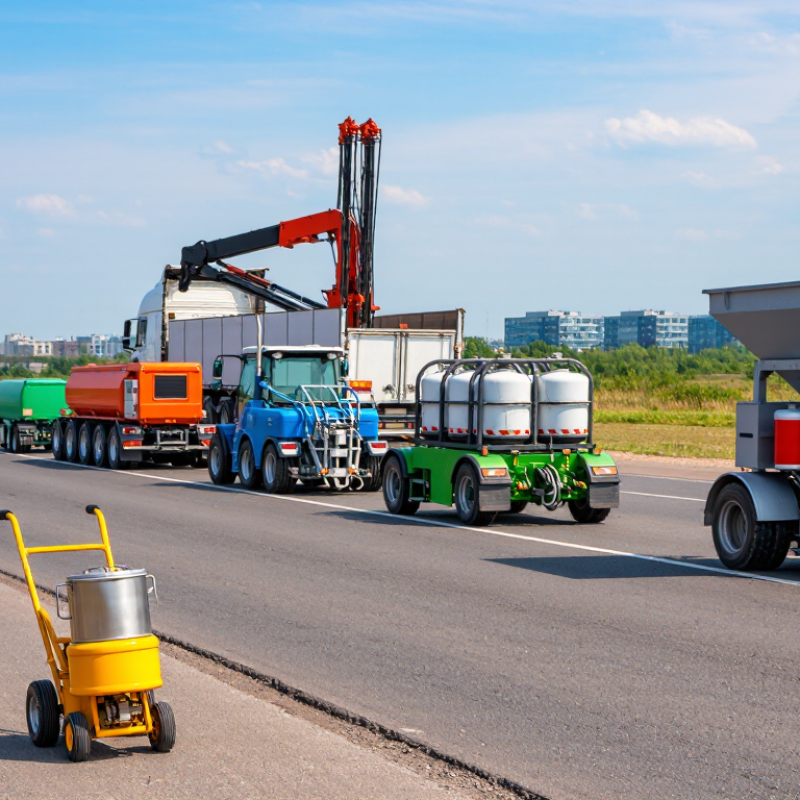
Road line machines are specialized systems for placing clear, durable markings on paved surfaces. They may use paint, cold plastic, or thermoplastic materials. Common designs include manual push models, ride-on units, spray machines, screed applicators, and truck-mounted systems. Each type serves a different working scale.
Their main purpose is traffic organization and safer movement. They create lane dividers, edge lines, arrows, pedestrian crossings, parking bays, and warning symbols. On highways, contractors usually need stable machines with accurate width control and large material capacity. In city streets, compact equipment can work around parked vehicles, drainage covers, and narrow corners. Airports, factory yards, schools, and logistics centers also depend on precise surface markings.
Practical selection requires more than comparing output speed. Buyers should examine line thickness, spray width, bead or glass-grit systems, cleaning access, and spare-part availability. Operator comfort matters during long shifts. So does calibration.
Real sites are rarely perfect. Dust, humidity, uneven asphalt, and sudden temperature changes can affect adhesion and visibility. Even a powerful machine may produce weak lines when the surface is poorly prepared. This is easy to overlook. A careful buyer should request operating instructions, maintenance records, safety data, and application tests before placing a large order. Recognized testing methods and local road standards should guide final specifications.
Road line machines apply, spray, screed, or remove pavement markings. The chart compares representative productivity levels commonly associated with different machine types. Actual output varies with line width, material, road layout, operator experience, and drying or curing time.
Productivity is shown in approximate square metres per hour and is intended for preliminary equipment comparison rather than as a guaranteed operating specification.
Among the top 10 types of road line machines, thermoplastic marking machines remain a practical choice for durable pavement lines. They melt resin, glass beads, pigments, and additives at controlled temperatures. The material bonds with asphalt and forms a raised, reflective profile.
FHWA’s Pavement Marking Handbook reports that thermoplastic markings can commonly last three to six years under suitable traffic and climate conditions. Actual life changes with snowplows, heavy trucks, surface moisture, and road preparation. NCHRP Synthesis 306 also highlights surface cleanliness and application control as major performance factors. Small errors matter. A cold substrate can reduce adhesion, while excessive heat may damage the material.
Machine selection should match the project, not only the purchase price. Hand-push thermoplastic machines suit crossings and short urban repairs. Self-propelled units improve output on longer routes. Ride-on machines reduce operator fatigue. Truck-mounted systems support highways and multi-line work. Screed application creates thicker lines, while spray systems offer faster coverage. Preheater-integrated models simplify temperature management. Dual-line machines improve productivity. Ribbed-line systems add tactile noise for driver awareness. Battery-assisted controls can reduce manual adjustment.
Tips: Check pavement moisture before heating. Use calibrated thermometers, not guesswork. Verify bead embedment after application. Keep a short test section. It may reveal poor adhesion before the full shift begins. I would also record ambient temperature, material temperature, line thickness, and traffic opening time. These records support quality reviews, although field conditions rarely behave perfectly.
Among the ten main types of road line machines, cold paint marking machines offer practical flexibility for global buyers. They apply water-based or solvent-based coatings without heating equipment. This reduces setup time and simplifies work on changing road layouts.
Hand-push models suit parking areas, narrow streets, and small repairs. Self-propelled machines cover longer routes with steadier walking speed.
Airless systems create sharp, dense lines under controlled pressure. Spray systems work faster, but overspray can increase near curbs or parked vehicles.
The choice depends on line width, paint viscosity, daily output, and surface condition.
Reliable installation begins with preparation. Operators should remove dust, oil, loose aggregate, and standing moisture. A clean surface matters more than impressive machine speed.
Before production, check nozzle wear, pump pressure, wheel alignment, and paint filtration. Uneven pressure often creates thin edges or broken stripes. That problem is easy to miss.
Cold paint machines also support adjustable guides, bead dispensers, and simple width controls. These features help teams mark arrows, crosswalks, parking bays, and temporary traffic changes.
However, performance changes with humidity, temperature, and pavement texture. Buyers should request test panels and confirm cleaning procedures before ordering. I would not choose a machine from catalog speed alone. Real roads are less cooperative. Local coating specifications and reopening requirements should guide final operation.
Choosing among the top ten types of road line machines starts with project scale. Small parking areas often need a walk-behind cold paint sprayer or compact thermoplastic applicator. They offer precise control around corners, bays, and narrow entrances. For highways, ride-on machines improve output and reduce operator fatigue. Truck-mounted systems suit long routes, multiple lanes, and large daily workloads. Airless sprayers usually deliver faster coverage, while air-spray units can create finer edges.
Surface condition changes the decision. Smooth asphalt accepts most systems with careful cleaning. Rough concrete may require stronger pressure, wider nozzles, or a primer. On cracked surfaces, rigid lines can fail early. I have seen excellent equipment produce poor markings because dust remained in the surface texture. Preparation is not optional. Moisture also matters, especially before applying thermoplastic or water-based paint.
Marking material should match the machine’s heating and delivery system. Cold paint machines are practical for frequent maintenance work and short drying windows. Thermoplastic equipment needs stable temperature control, insulated hoses, and trained operators. Two-component systems can support durable lines, but mixing errors waste expensive material. Reflective beads require a calibrated dispenser, not a simple hand attachment. Check pump compatibility, nozzle size, cleaning access, and spare-part availability before purchase. A machine that looks powerful may become inefficient on small sites. Trial runs on the actual surface reveal more than catalog figures.
| No. | Machine Type | Best Project Scale | Recommended Surfaces | Compatible Marking Materials | Typical Application | Typical Line Width | Typical Productivity Range | Key Buying Consideration |
|---|---|---|---|---|---|---|---|---|
| 1 | Handheld Aerosol Line Marker | Small maintenance jobs and short-term work | Asphalt, concrete, warehouse floors, sports courts | Aerosol traffic paint and temporary marking paint | Parking bays, utility layouts, repair areas, temporary traffic control | Approximately 30–100 mm | Short runs; generally below 1,000 m per day | Choose for portability and low setup cost; it is not intended for long highways or high-volume production. |
| 2 | Walk-Behind Airless Spray Marker | Small to medium municipal and contractor projects | Asphalt, concrete, interlocking paving, indoor slabs | Water-based paint, solvent-based traffic paint, selected low-viscosity acrylic coatings | Parking lots, bike lanes, edge lines, arrows, symbols and road repairs | Approximately 50–300 mm | About 1,000–4,000 m per day, depending on layout and drying time | A practical general-purpose choice; compare pump pressure, tip availability, paint filtration and cleaning requirements. |
| 3 | Walk-Behind Cold Paint Spray Marker | Medium projects requiring economical line repainting | Asphalt and prepared concrete surfaces | Waterborne or solvent-based cold traffic paint | Center lines, lane lines, parking areas, pedestrian crossings and directional markings | Approximately 50–450 mm | About 2,000–6,000 m per day under favorable conditions | Check whether the pump and seals are compatible with the selected paint chemistry and required bead system. |
| 4 | Walk-Behind Thermoplastic Screed Marker | Small to medium durable marking projects | Asphalt and sound concrete with suitable primer where required | Hot-melt thermoplastic and reflective glass beads | Crosswalks, stop lines, arrows, symbols, parking lines and short road sections | Approximately 50–500 mm | About 500–2,500 m per day, influenced by heating and material loading | Evaluate kettle capacity, heating control, screed adjustment, bead application and fuel or electric power availability. |
| 5 | Thermoplastic Spray Marker | Medium to large projects needing faster thermoplastic application | Asphalt and compatible concrete pavements | Spray-grade hot thermoplastic and reflective glass beads | Long center lines, lane dividers, edge lines and high-build markings | Approximately 75–450 mm | About 2,000–8,000 m per day, depending on road configuration | Confirm operating temperature control, spray-gun configuration, bead distribution and material melting capacity. |
| 6 | Two-Component Cold Plastic Marker | Medium to large projects requiring high durability | Asphalt, concrete and textured pavements after proper preparation | Two-component cold plastic, including MMA-based systems, with optional beads | High-wear intersections, pedestrian crossings, cycle lanes, symbols and structured markings | Approximately 50–500 mm | About 500–4,000 m per day, depending on mixing and curing requirements | Prioritize accurate component ratio control, pot-life management, cleaning procedures and worker safety controls. |
| 7 | Preformed Tape Application Machine | Small to medium projects with detailed or rapid-installation requirements | Clean, dry asphalt and concrete; some products require heat activation | Preformed thermoplastic tape and preformed marking sheets | Symbols, arrows, legends, crosswalk blocks, temporary markings and decorative road graphics | Pre-cut shapes or rolls; commonly 50–600 mm sections | Approximately 100–1,500 m per day, depending on design complexity | Check substrate cleanliness, adhesion method, storage conditions, pattern flexibility and compatibility with local traffic requirements. |
| 8 | Ride-On Line Marking Machine | Medium projects where operator comfort and output are important | Asphalt, concrete, large parking areas and industrial pavements | Waterborne paint, solvent-based paint, selected cold plastic and bead systems | Large parking lots, airports, logistics yards, multi-lane roads and industrial sites | Approximately 50–600 mm | About 3,000–10,000 m per day, depending on layout and equipment configuration | Compare turning radius, visibility, tank capacity, line-control accuracy, operator ergonomics and transport dimensions. |
| 9 | Self-Propelled Road Marking Machine | Large road, highway and airport maintenance projects | Asphalt and concrete pavements prepared to specification | Waterborne paint, solvent-based paint, thermoplastic or cold plastic, depending on configuration | Long center lines, edge lines, lane dividers, shoulders and complex road layouts | Approximately 75–600 mm | About 5,000–15,000 m per day in continuous line work | Assess navigation accuracy, automatic line control, material capacity, bead system, cleaning access and road-speed performance. |
| 10 | Truck-Mounted Multi-Function Marker | Large-scale highway, airport and national road programs | Asphalt and concrete roads, including multi-lane pavements | Waterborne paint, solvent-based paint, thermoplastic, cold plastic and reflective beads with the correct modules | High-volume lane marking, simultaneous multi-line work, long-distance road maintenance and large contracts | Approximately 75–750 mm per line; multiple guns may be installed | About 10,000–30,000 m per day for continuous road-line operations | Review vehicle payload, modular tanks, multi-gun layout, traffic protection, calibration, maintenance support and local road regulations. |
Note: Productivity and line-width figures are typical planning ranges rather than guaranteed outputs. Actual performance depends on pavement condition, surface preparation, traffic management, weather, material temperature, drying or curing time, line layout and operator experience.
They apply water-based or solvent-based coatings without heating equipment. They suit parking areas, narrow streets, repairs, and changing road layouts. Setup is usually simple. Real pavement still creates surprises.
A hand-push model often works well for parking bays and short repairs. It is easier to move around corners and parked vehicles. Check wheel alignment before painting. Small errors remain visible.
Self-propelled machines suit longer routes and repeated daily work. Their steadier walking speed can improve line consistency. They need enough space for turning and transport. Speed alone is not enough.
Airless systems create sharp, dense lines through controlled pressure. Spray systems cover areas faster, but overspray may increase near curbs. The correct choice depends on paint viscosity, line width, and site conditions. Faster can become messier.
Remove dust, oil, loose aggregate, and standing moisture. A clean surface usually matters more than impressive machine speed. Inspect cracks and rough areas closely. Preparation is easy to underestimate.
Check nozzle wear, pump pressure, wheel alignment, and paint filtration. Confirm the paint flows evenly through the system. Uneven pressure may produce thin edges or broken stripes. That defect is easy to miss.
They suit highways, intersections, airports, and industrial yards. Reactive materials cure after chemical mixing rather than simple air drying. Spray systems create thinner lines with fast coverage. Screed systems apply thicker markings for arrows, symbols, and textured surfaces.
Inspect pump accuracy, mixer design, nozzle control, and cleaning access. Verify the component ratio before every shift. Record pressure settings and run a short test line. Calibration may drift.
Humidity, temperature, and surface moisture can change curing and adhesion. Pavement texture also affects thickness and edge quality. Test panels provide useful evidence before full production. Catalog claims may not survive real roads.
Consider spare parts, operator training, transport size, cleaning procedures, and technical support. Confirm local coating specifications and reopening requirements. A machine with lower output may deliver steadier results. I would rethink any choice based only on speed.
Road line machines are specialized systems used to apply clear, consistent markings on roads, highways, parking areas, airports, and industrial pavements. The main types include thermoplastic marking machines, cold paint sprayers, two-component spray systems, screed applicators, airless spray machines, ride-on models, walk-behind units, pre-marking machines, rumble-strip marking equipment, and multifunctional road marking systems. Each type is designed for different working conditions, production speeds, line widths, and material requirements.
Thermoplastic machines create durable, highly visible pavement lines, while cold paint machines provide flexible and practical solutions for routine projects and varied surfaces. Two-component spray and screed machines are suitable for high-performance markings that require strong adhesion, thickness, and long service life. When selecting a road line machine, global buyers should consider project scale, pavement condition, climate, required line accuracy, application method, maintenance needs, and marking material. A proper match between equipment and project requirements can improve efficiency, safety, appearance, and long-term marking performance.
