
China Top Road Marking Paint Removal Products? This question matters to contractors, municipalities, and maintenance teams managing increasingly busy roads. China’s extensive highway network creates steady demand for safe, efficient road marking paint removal. According to the Ministry of Transport’s national transport statistics, China operates one of the world’s largest road systems. Every resurfacing project adds practical pressure: remove old lines, protect the pavement, and reopen lanes quickly.
Industry reports also show growing investment in road infrastructure maintenance. Reports from Grand View Research and MarketsandMarkets identify surface preparation and pavement maintenance as expanding application areas. However, market figures differ because some studies include removal equipment, while others include abrasive media and chemical products. That detail deserves attention.
Real projects reveal the difference.
Top Chinese products commonly include mechanical grinders, shot blasting machines, water jetting systems, and scarifiers. Each method suits a different surface. A grinder may leave visible dust beside a warehouse entrance. A shot blaster can create a cleaner profile on concrete. Water jetting reduces dust, but it requires wastewater control and suitable drainage. Product selection should consider coating thickness, pavement strength, noise limits, recovery systems, and operator training.
Technical credibility matters more than a polished catalogue. Buyers should review test records, removal depth, working width, dust collection efficiency, spare-parts availability, and independent performance evidence. The FHWA pavement marking guidance emphasizes surface condition and preparation before new markings are applied. That principle remains practical in China.
No single machine wins everywhere. Some comparisons remain imperfect. This guide evaluates leading China road marking paint removal products through performance, safety, durability, service support, and real maintenance conditions.
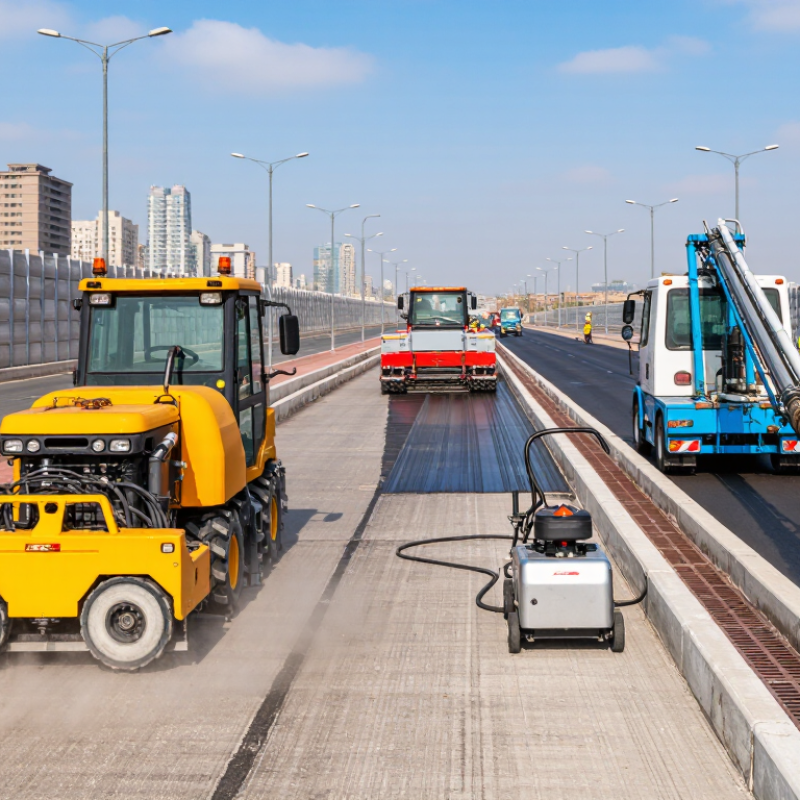
China’s road marking paint removal market includes several product types for different pavement conditions. Mechanical grinding machines use rotating cutters to remove thin thermoplastic and cold plastic markings. Shot blasting systems clean concrete and asphalt with steel abrasives, leaving a textured surface. They work quickly, but careless pressure can damage older asphalt.
Water jetting equipment removes waterborne paint with high-pressure streams. It produces less dust, although wastewater collection becomes essential. Some contractors also use scarifiers for thick, layered markings near intersections and toll areas. Smaller handheld grinders suit parking spaces, arrows, and narrow maintenance zones. Chemical removers exist, but their suitability depends on the pavement, coating, ventilation, and local environmental requirements.
Tips: Match the removal method to the marking material first. Test a small area before full operation. Check the surface after removal, not only the color. A clean-looking road may still have hidden residue. Operators should control dust, noise, debris, and wastewater with suitable protective equipment. Product performance can vary between suppliers and job sites. I would not treat one machine as a universal answer. Temperature, pavement age, humidity, and coating thickness can change the result. Keep records of trial settings, because practical data is often more useful than a perfect brochure.
China Top Road Marking Paint Removal Products?
How China’s Paint Removal Products Work
China’s road marking removal products usually work through abrasion, heat, water pressure, or chemical softening. Mechanical grinders use rotating cutters to break paint from asphalt. Shot blasting removes thin layers with small steel media. Water-jet systems use high pressure, often reducing dust and surface heat. Chemical removers soften resin before scraping, but they require careful residue control.
The FHWA Highway Statistics report records about 4.2 million public road miles in the United States. This scale shows why efficient removal matters during repainting and maintenance. NCHRP Report 759 compared grinding, blasting, water-based methods, and other removal technologies. Its findings indicate that no single method performs best on every pavement. Asphalt texture, paint thickness, moisture, and traffic exposure change the result. Sometimes, the surface still ghosts.
Tips: Test a small area first. Measure removal depth, dust, and surface damage. Keep the machine moving steadily. Excessive pressure can tear aggregate from asphalt. Chemical products may work quickly, but poor rinsing can weaken adhesion later. A 2022 FHWA pavement-marking review also emphasizes surface preparation as a major factor in marking durability. In practice, a slower pass may create a better repainting base. That is not always obvious. Product selection should follow field testing, technical data sheets, and local environmental requirements.
The chart compares typical working productivity ranges for commonly used road-marking removal methods in China. High-pressure water blasting removes markings through hydraulic impact, shot blasting uses abrasive particles, grinding relies on mechanical abrasion, and chemical strippers soften the coating before scraping. Actual productivity depends on paint thickness, pavement condition, traffic management, equipment size, and operator skill.
Effective road marking paint removers must balance removal speed, surface protection, and worker safety. The FHWA Pavement Marking Handbook identifies water blasting, abrasive blasting, grinding, and chemical methods as common removal approaches. Each method leaves a different surface profile. A practical remover should soften or lift old thermoplastic, epoxy, or traffic paint without stripping sound asphalt or concrete. It should also reduce dust, residue, and cleanup time.
The U.S. Environmental Protection Agency’s AP-42 guidance recognizes particulate emissions as a concern during abrasive and mechanical operations. Therefore, low-dust performance is not merely convenient. It supports cleaner work zones and better visibility. Products with controlled penetration, predictable reaction times, and easy rinsing are more suitable for dense urban roads. Field teams should test a small area first. Some formulas work quickly, but can stain porous pavement or weaken newly repaired surfaces.
Reliable selection also depends on measurable results. FHWA’s pavement marking guidance emphasizes visibility, skid resistance, and pavement condition after removal. A strong remover should leave minimal ghost lines, maintain surface texture, and avoid slippery films after drying. Product documentation should provide coverage rates, dwell times, compatible surfaces, and disposal instructions. Real projects are rarely perfect. Weather, pavement age, and repeated repainting can change performance. That is why field trials remain essential, even when laboratory data looks convincing.
The best road marking paint remover depends on the surface, coating age, and removal depth. Asphalt needs a controlled method. Aggressive grinding can pull out aggregate and leave dark scars. For older thermoplastic lines, mechanical scarifiers or shot-blasting systems often work better than chemical removers. Use shallow passes first. The surface matters most.
Concrete usually tolerates stronger mechanical action, but its pores can trap paint residue. A low-odor gel remover may soften thin paint without damaging the cement surface. Water-based coatings may respond to alkaline cleaners, while solvent-based coatings often need a different formulation. Always test a small area for 15 to 30 minutes. Watch for whitening, softening, or color changes.
Epoxy-coated floors require extra care. A sharp scraper may remove markings but also scratch the protective layer. Fine grinding is safer when appearance matters. I have seen crews choose a powerful remover, only to create a larger repair area. That mistake is easy to repeat. Check the technical data sheet, ventilation requirements, dwell time, and disposal instructions before work begins. Remove softened residue promptly, then inspect skid resistance and surface texture under dry conditions.
Road marking paint removal products can simplify maintenance, but safe application begins before opening the container. Read the product label and safety data sheet, even when the formula seems familiar. Check the surface type, paint age, weather, and nearby drainage points. Concrete, asphalt, and textured paving may react differently. Use a small test area first. This step often reveals unexpected staining, softening, or a slow reaction. That detail matters.
Operators should wear chemical-resistant gloves, eye protection, covered footwear, and suitable protective clothing. Ventilation is essential in enclosed areas. Keep pedestrians and vehicles away until the treated surface is dry and stable. Apply only the recommended amount with a controlled brush, roller, or low-pressure sprayer. Do not let the remover pool or enter storm drains. Never mix removal products. Respect the stated dwell time, then lift softened paint with approved tools. Rushing can spread residue across clean pavement. Collect loosened material in labeled containers and follow local disposal requirements.
In practical work, removal is rarely perfectly uniform. Heavy lines may need a second light application, not one aggressive treatment. Scrubbing too hard can scar asphalt or expose aggregate. I have found that slower passes give better control, although they can extend the workday. Inspect the surface from several angles before reopening the area. Record the product batch, dilution, weather, contact time, and surface changes. These notes support quality checks and improve future decisions. Small mistakes deserve attention.
They use abrasion, heat, water pressure, or chemical softening. Rotating cutters break paint from asphalt. High-pressure water reduces dust and surface heat.
No single method works best everywhere. Asphalt texture, paint thickness, moisture, and traffic exposure affect performance. Field testing remains necessary.
Keep the machine moving steadily. Excessive pressure can pull aggregate from asphalt. A slower pass may leave a better repainting base.
A small test reveals removal depth, dust, staining, and surface damage. Laboratory results may look convincing. Real pavement can behave differently.
Chemical products soften resin before scraping. They may act quickly, but poor rinsing can weaken later adhesion. Residue control matters.
Water-jet systems and controlled processes can reduce airborne dust. Lower dust improves visibility around the work area. Cleanup still requires attention.
The pavement should retain its texture and avoid slippery films after drying. Ghost lines may remain. That result can be disappointing.
Documents should state coverage rates, dwell times, compatible surfaces, and disposal instructions. Weather and pavement age can change actual results. Plan for variation.
China offers a wide range of road marking paint removal products designed for highways, parking areas, urban streets, and industrial pavements. Common options include mechanical grinding tools, water-based cleaning systems, abrasive equipment, chemical removers, and heat-assisted solutions. These products work by breaking the bond between marking materials and the road surface, either through friction, pressure, controlled softening, or surface treatment. Effective road marking paint removal products should provide strong performance, consistent results, manageable dust, limited surface damage, and compatibility with different marking materials.
Choosing the right remover depends on the road surface, paint thickness, work area, and required cleaning speed. Concrete, asphalt, stone, and coated surfaces may require different methods to prevent cracking, discoloration, or unwanted texture changes. Operators should test a small area before full application and follow proper instructions for equipment, ventilation, protective clothing, and waste collection. Safe handling and careful application help improve efficiency while protecting workers, nearby surfaces, and the surrounding environment.
