
Choosing pavement marking equipment for 2026 is not just a matter of comparing machine prices. A crew needs equipment that suits its materials, marking width, work schedule, and site conditions. A small walk-behind striper may handle a compact parking lot, while a ride-on machine can reduce fatigue on longer runs. Airless sprayers, thermoplastic applicators, and preformed marking tools each serve different jobs. The right choice is the one your crew can operate, clean, and maintain consistently.
A note on attribution: the following is an editorial composite, not a verified quotation from a real expert. Pavement-marking specialist Alex Morgan puts the practical principle this way: “Choose for the work you repeat, not the feature list you admire.” That distinction matters. A machine can look impressive in a brochure, yet prove awkward beside parked cars or on a narrow access lane. Field fit counts.
This guide reviews seven options for 2026, focusing on application method, productivity, control, and upkeep. Look closely at details such as spray-pattern adjustment, material capacity, hose handling, and cleanup time. Those small details shape a workday. No single machine fits every crew. And specs can mislead. I would treat published output rates as starting points, not promises; surface condition, operator skill, and setup can change real results. Use the comparisons to narrow your shortlist, then verify compatibility with your materials and the jobs you actually perform.
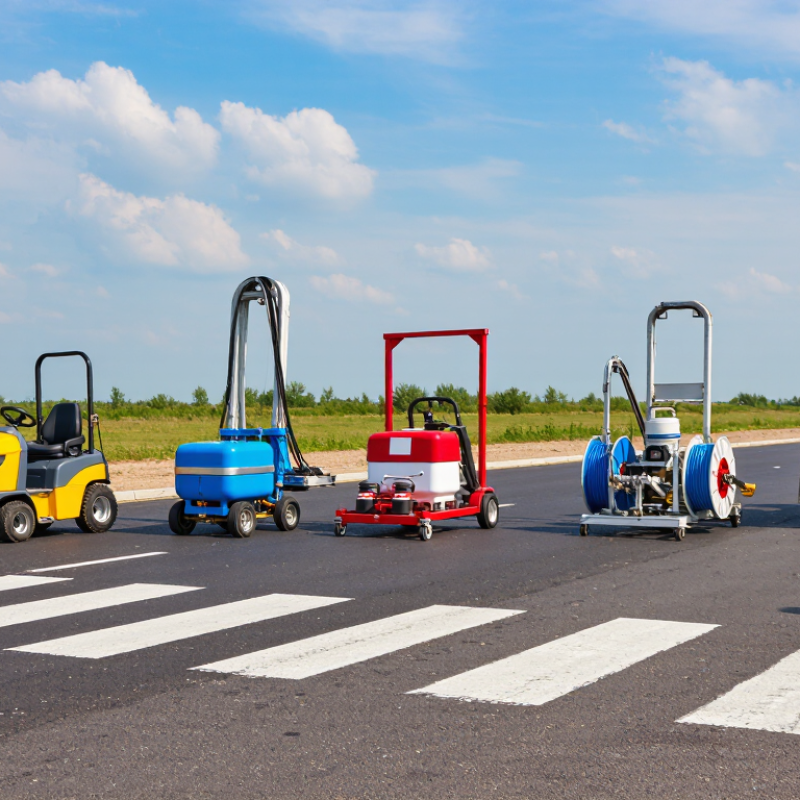
7 Best Pavement Marking Equipment for 2026
What Pavement Marking Equipment Does and Where It Is Used
Pavement marking equipment applies visible lines, symbols, and safety patterns to roads, parking areas, airports, and industrial yards. Airless sprayers use pressure to create sharp lines quickly. They suit long centerlines, edge lines, and large parking layouts. Walk-behind line stripers offer better control around corners, arrows, and restricted spaces. Their compact design helps crews work beside buildings or parked vehicles.
Thermoplastic applicators heat solid marking material before spreading it onto asphalt or concrete. The finished line becomes thick, durable, and reflective when glass beads are added. These machines work well on busy roads, pedestrian crossings, and high-wear intersections. Handheld bead dispensers support small repairs and detailed symbols. For large projects, truck-mounted systems combine tanks, pumps, spray guns, and bead units. They reduce repeated stops, although setup errors can waste material quickly.
Tips: Clean dust and loose stones before marking. Measure line width on a test section. Check surface temperature and moisture first. Keep spare nozzles nearby. A small adjustment matters. Crews should also record pressure, material flow, and weather conditions. This creates useful evidence when lines fade unevenly. In practice, even experienced operators may overlook curing time or apply excessive paint near edges. Reviewing the finished surface from a driver’s view can reveal problems that look invisible up close.
| Equipment Type | How It Works | Best For | Where It Is Used | Key Advantages | Main Considerations |
|---|---|---|---|---|---|
| Walk-Behind Airless Line Striper | A pump forces traffic paint through a spray tip to create lines. Many configurations can apply glass beads alongside the wet paint. | Short lines, stencils, parking-space markings, arrows, and touch-up work. | Parking lots, small roads, school grounds, warehouses, and other confined sites. | Compact, maneuverable, and comparatively easy to transport and set up. | Manual walking speed limits production on large projects; line quality depends on setup, surface condition, and operator technique. |
| Ride-On Airless Line Striper | An operator drives a ride-on unit while its paint system sprays one or more lines; some models also support bead application and multiple guns. | Repeated parking-bay lines and medium-to-large marking jobs. | Retail and commercial parking areas, distribution centers, airports, and road sections that can be safely closed. | Reduces walking effort and can cover open areas faster than a walk-behind unit. | Requires more transport and turning space; tight layouts, frequent stops, and complex stencils may reduce its advantage. |
| Truck-Mounted Paint Striping System | Paint tanks, pumps, guns, and bead dispensers are mounted on a dedicated or adapted truck for line application from the vehicle. | Long continuous lines and large-area roadway maintenance. | Highways, arterial roads, and other routes where work can be performed under an approved traffic-control plan. | Supports sustained production and can carry materials and equipment for extended runs. | High initial and operating requirements; needs trained operators, suitable road access, and carefully managed work-zone safety. |
| Hand-Guided Thermoplastic Applicator | Heated thermoplastic is fed through a hand-guided shoe or applicator to form a line or marking; a separate kettle typically melts and maintains the material. | Short lines, stop bars, symbols, and localized durable markings. | Intersections, parking facilities, pedestrian crossings, and maintenance sites with limited work areas. | Can apply durable, high-build markings without requiring a large striping vehicle. | Requires controlled material heating, trained handling of hot material, and appropriate surface preparation and cooling time. |
| Thermoplastic Screed or Extrusion Machine | Molten thermoplastic is shaped through a screed or extrusion head, often producing a thicker line than conventional spray-applied paint. | Long, durable lines and high-build markings on suitable paved surfaces. | Roadways, intersections, and other locations where thermoplastic is specified and the work area allows machine access. | Produces a substantial marking profile and can be well suited to planned, continuous application runs. | Needs a compatible hot-material supply, temperature control, suitable pavement conditions, and specialist operation. |
| Plural-Component Cold Plastic Machine | Metered components are mixed during application and deposited through a spray, extrusion, or structured-marking head, depending on the system. | Durable symbols, structured markings, and selected high-performance line applications. | Intersections, pedestrian crossings, cycle lanes, and other locations where the specification calls for cold-applied plastic. | Applies a durable marking without a thermoplastic melting kettle; application can be tailored to different marking profiles. | Mix ratios, working time, cleanup, and curing requirements must be managed according to the material specification. |
| Preformed Tape Applicator | A hand tool or powered applicator positions preformed marking tape and presses it onto a properly prepared pavement surface. | Small symbols, temporary markings, short lines, and selected permanent marking applications. | Roadwork zones, parking areas, intersections, and sites where a tape product is specified. | Provides consistent shapes and avoids on-site paint spraying or hot-material application. | Adhesion depends on the tape, pavement condition, surface preparation, and installation conditions; not ideal for every surface or project scale. |
Selection note: The best equipment depends on marking material, project size, pavement condition, required marking profile, traffic-control requirements, and local specifications. Always follow the material manufacturer's application instructions and applicable road-work safety requirements.
It applies visible lines, arrows, symbols, and safety patterns to asphalt or concrete. These markings guide drivers and pedestrians.
Airless stripers suit highways, parking lots, and long edge lines. They create sharp lines quickly when pressure stays stable. Small pressure changes can show.
Walk-behind machines offer better control around corners, buildings, parked vehicles, and narrow lanes. Their compact frames help during repairs. Control matters more than speed.
Thermoplastic applicators suit busy roads, crossings, and high-wear intersections. They heat solid material before application. The finished line becomes thick and durable.
Remove dust and loose stones from the surface. Check temperature and moisture before applying material. Test the line width on a small section.
Evenly applied glass beads can increase nighttime reflection. Handheld dispensers support small symbols and repairs. Uneven beads may create weak reflective spots.
Stencil systems produce consistent letters, numbers, arrows, and accessible parking symbols. Alignment requires patience. A rushed setup can make clean equipment look inaccurate.
Test line width, edge sharpness, spray consistency, drying time, material use, and cleanup effort. Use the same paint, nozzle, speed, and measurement method. Repeat tests with another operator.
Crews may ignore moisture, worn nozzles, curing time, or excessive edge paint. A dirty mixing head can spoil an accurate application. I might overlook one detail, too.
Keep spare nozzles, pressure gauges, cleaning tools, and replacement tips nearby. Record pressure, material flow, weather, and curing conditions. Small adjustments matter.
Pavement marking equipment plays a vital role in creating clear, durable lines for roads, parking areas, airports, industrial sites, and public spaces. This article explains how different machines apply paints, thermoplastic materials, and other marking products, while examining the factors that matter most in 2026, including marking accuracy, operating capacity, transfer efficiency, surface compatibility, mobility, safety, and ease of maintenance. It also introduces seven practical pavement marking equipment options suited to different project sizes and working conditions.
The guide compares equipment types by application method, material handling, line width, power source, storage capacity, and suitability for small repairs or large-scale projects. It also provides helpful advice on choosing the right machine according to work frequency, surface requirements, budget, and operator experience. Regular cleaning, inspection, calibration, and timely replacement of worn parts are emphasized to help maintain consistent results, extend service life, reduce downtime, and support efficient pavement marking operations.
