
Choosing a road marking spray paint machine in 2026 requires more than comparing engine power or tank size. A busy urban road may need precise lines around parked cars, while a rural contractor may value transportability and long spraying hours. The machine must match paint viscosity, nozzle width, road texture, traffic conditions, and crew experience.
The World Health Organization’s Global Status Report on Road Safety 2023 records approximately 1.19 million annual road deaths worldwide. Clear markings cannot solve every safety problem, but they support driver guidance and lane recognition. FHWA’s Manual on Uniform Traffic Control Devices also stresses consistent visibility, placement, and maintenance. Dr. Hugh L. Hawkins, a recognized pavement-marking researcher, stated, “Pavement markings are a critical component of the roadway system.” That principle still matters when selecting a road marking spray paint machine.
Look closely at the details. Can one operator adjust pressure without stopping? Does the spray pattern remain sharp after several hours? How easily can dried paint be removed from the nozzle? Small failures become expensive delays.
No machine fits every project.
Buyers should compare transfer efficiency, bead-drop capability, cleaning design, spare-part access, and verified field performance. Market forecasts may suggest rising infrastructure demand, including analysis from Grand View Research’s road-marking materials studies, but forecasts do not replace site trials. A machine that performs well in a brochure may struggle on rough asphalt, steep gradients, or cold mornings. Choosing carefully means testing the equipment against real conditions, not merely trusting impressive specifications.
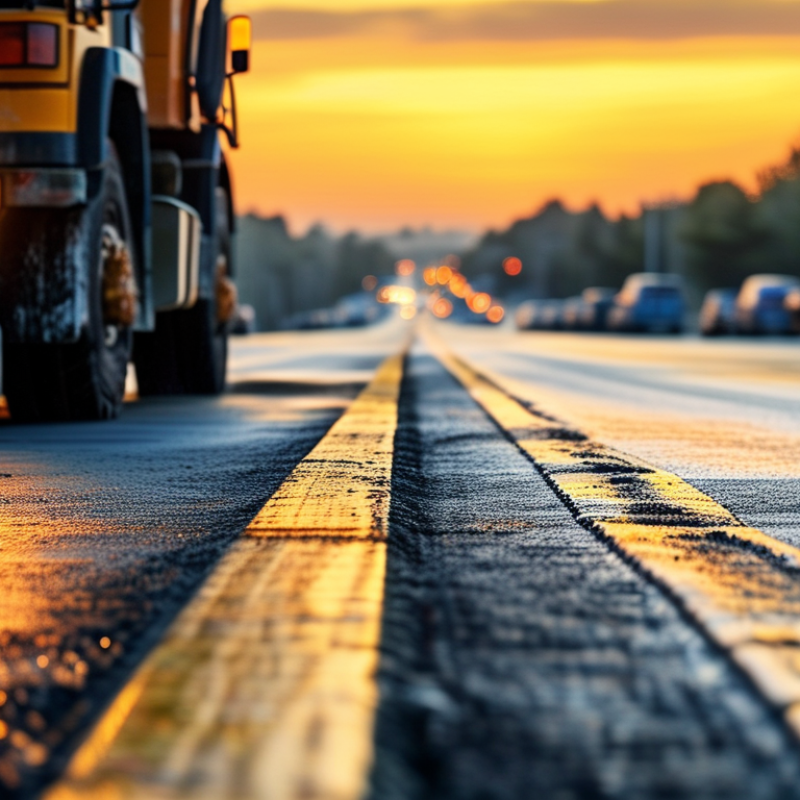
Road marking machines generally fall into walk-behind, ride-on, truck-mounted, and thermoplastic types. Walk-behind units suit parking lots, narrow paths, and small maintenance work. Ride-on machines reduce operator fatigue on long lanes. Truck-mounted systems handle highways and large projects, while thermoplastic machines apply heated, durable materials. Each type serves a different working rhythm.
Core functions matter more than appearance. Look for adjustable spray pressure, stable line width, quick-cleaning pumps, and replaceable nozzles. Some machines support glass bead application, improving nighttime visibility. The World Health Organization’s Global Status Report on Road Safety 2023 recorded about 1.19 million annual road deaths worldwide. Clear markings cannot solve every risk, but poor visibility adds avoidable confusion. Field conditions matter too. Wind, dust, moisture, and uneven pavement can weaken an otherwise precise line.
Tips: Measure daily marking length before choosing engine size. Test paint flow at the actual site temperature. Check whether one operator can clean the system safely. A wider nozzle is not always better. It may waste paint on tight curves. The U.S. Federal Highway Administration emphasizes consistent pavement-marking performance and proper maintenance in its traffic-control guidance. Still, specifications alone can mislead. I would leave room for trial runs, because the “best” machine may perform poorly with a different paint formula or surface texture.
Choosing a road marking spray paint machine starts with the road, not the machine. Rough asphalt, patched surfaces, dust, moisture, and steep grades change spray performance. FHWA’s Pavement Marking Handbook explains that surface texture and weather strongly affect adhesion, drying, and visibility. Test a short section first. Watch the edge.
Marking requirements define the spray system. Narrow lane lines need stable pressure and accurate nozzle control. Arrows, symbols, and stop lines need quick pattern changes. Water-based paint may require stronger air movement during humid weather. High-build materials may need larger pumps and wider passages. NCHRP Report 759 links pavement marking performance with application quality, retroreflectivity, and maintenance timing. A machine with impressive output can still create weak lines if pressure fluctuates.
Project scale affects tank size, engine power, cleaning time, and operator fatigue. FHWA Highway Statistics 2022 records about 4.2 million public road miles in the United States. Large networks demand dependable production and simple servicing. Small contractors may benefit more from compact transport and fast setup. I would not trust catalog output alone. Measure actual coverage on your pavement, including refill delays and rejected lines. That estimate is less glamorous, but usually more honest.
2026 How to Choose a Road Marking Spray Paint Machine?
Comparing Spray Systems, Power Sources, and Application Methods
Choosing a road marking spray paint machine starts with the spray system. Airless systems push paint through a small nozzle under high pressure. They create sharp lines and work well with thicker coatings. Air-assisted systems add controlled air, producing softer edges and smoother coverage. Conventional air spray can handle detailed work, but it may waste more material. Test the spray pattern on cardboard before marking pavement. Small nozzle changes can alter line width noticeably.
Power source affects daily reliability. Battery machines are quieter and useful near occupied buildings. Electric models provide steady output when a suitable power supply is available. Gas-powered units often support longer outdoor work, but they need ventilation and regular maintenance. I once focused too much on engine power and ignored hose length. That decision made tight corners harder to reach. The strongest machine is not always the most practical one.
Application method should match the surface and marking plan. Manual walk-behind machines suit short paths, parking areas, and frequent adjustments. Ride-on units save effort across large sites, though they require wider turning space. Spray tips, paint viscosity, surface moisture, and walking speed all influence the result. Practice matters. Even experienced operators can create uneven edges when the pavement changes texture. Keep spare tips available, record pressure settings, and inspect each line under different light.
| Selection Dimension | Option | Typical Operating Data | Best Application | Main Advantages | Main Limitations | 2026 Selection Guidance |
|---|---|---|---|---|---|---|
| Spray System | Airless spray | Fluid pressure commonly ranges from approximately 140–210 bar (2,000–3,000 psi), depending on the pump, nozzle, and coating. Uses a reversible tip to help clear blockages. | Long lines, parking bays, center lines, edge lines, symbols, and arrows on asphalt or concrete. | High productivity, strong atomization, good line definition, and no compressed-air compressor required. | Overspray can increase in windy conditions. Incorrect pressure or nozzle selection may produce tails, uneven edges, or excessive paint use. | Recommended for most professional road marking |
| Spray System | Air-assisted airless | Combines hydraulic paint pressure with a small volume of shaping air. Hydraulic pressure is generally lower than standard airless operation, while the air cap improves edge control. | Projects requiring cleaner edges, reduced overspray, and improved finish control. | Better spray pattern control than conventional airless systems and potentially lower overspray. | More components to adjust, greater cleaning requirements, and higher equipment complexity. | Recommended for precision work and mixed layouts |
| Spray System | Conventional air spray | Uses compressed air for atomization. Typical supply pressure is approximately 3–8 bar (45–115 psi), depending on the spray gun and material. | Detailed symbols, small-area touch-ups, and applications where a compressor is already available. | Fine control of atomization and pattern width; suitable for detailed work. | Higher overspray potential, compressor noise, moisture management needs, and lower transfer efficiency than airless spraying. | Choose when detail control is more important than speed |
| Spray System | Low-pressure or HVLP-style spray | Uses higher air volume and lower fluid pressure than conventional air spray. Exact pressure and air volume depend on the gun and coating viscosity. | Small markings, stencils, maintenance work, and areas where overspray must be minimized. | Good operator control and relatively soft spray pattern. | Usually slower for long lines and may require thinning or material adjustment if the coating is highly viscous. | Suitable for detail work, not ideal for high-output striping |
| Power Source | Gasoline engine | Common for high-output mobile machines. Fuel-powered units can support hydraulic pumps and multiple spray guns without grid power. | Large parking areas, roads, airports, construction sites, and remote locations. | High sustained output, long operating range, and independence from electrical outlets. | Exhaust emissions, engine noise, fuel storage, vibration, and indoor-use restrictions. | Best for extended outdoor production work |
| Power Source | Battery-electric | Usually powered by rechargeable lithium-ion battery packs. Runtime varies with spray pressure, duty cycle, battery capacity, and temperature. | Indoor facilities, hospitals, campuses, warehouses, residential areas, and short-to-medium projects. | Low noise, no direct exhaust emissions, easy starting, and good maneuverability. | Limited runtime, charging downtime, battery replacement cost, and reduced performance when batteries are cold or heavily loaded. | Preferred where noise and emissions are restricted |
| Power Source | Electric corded | Requires a suitable electrical supply and extension-cord management. Output remains consistent while power is available. | Workshops, enclosed facilities, and projects with reliable mains electricity. | No fuel handling, consistent power, and generally simple maintenance. | Cable movement can restrict range and create trip or damage hazards. Not practical where electrical access is unavailable. | Use mainly in controlled locations with safe power access |
| Power Source | Manual or hand-push mechanical | Paint is applied by manually moving the machine; some models use a small pump or wheel-driven mechanism rather than an engine. | Small parking lots, temporary markings, sports courts, and occasional maintenance. | Low purchase cost, simple operation, low maintenance, and no fuel or charging system. | Lower productivity, operator fatigue, and less consistent output on long lines or uneven surfaces. | Suitable for light-duty and low-frequency use |
| Application Method | Single-gun spraying | One spray gun applies one line or marking pattern at a time. Width is controlled by nozzle size, pressure, and gun height. | General-purpose maintenance, small contractors, and mixed marking layouts. | Lower equipment cost, simpler setup, and flexible line-width adjustment. | Lower output than multi-gun configurations and more passes for parallel lines. | Good starting configuration for varied projects |
| Application Method | Dual-gun or multi-gun spraying | Two or more guns can apply parallel lines or different colors in one pass. Spacing and trigger synchronization must be adjustable. | Road center lines, lane layouts, large parking areas, and repetitive striping. | Higher productivity and reduced travel time between parallel markings. | Higher purchase cost, more complex cleaning, and greater alignment requirements. | Best for repetitive, high-volume line marking |
| Application Method | Hand-guided push machine | The operator controls direction and speed directly. Line straightness depends on wheel alignment, surface condition, and operator technique. | Parking spaces, walkways, small roads, symbols, and maintenance marking. | Compact size, easy transport, and good visibility of the marking area. | Less productive than ride-on equipment and more sensitive to operator fatigue. | Best for compact sites and frequent repositioning |
| Application Method | Ride-on or self-propelled machine | The drive system controls travel speed and reduces manual pushing effort. Some configurations support multiple guns and larger paint tanks. | Large parking facilities, airports, industrial yards, and long road sections. | Higher daily output, improved operator comfort, and more consistent travel speed. | Larger transport footprint, higher cost, and reduced maneuverability in tight spaces. | Best for large-area and high-frequency operations |
| Paint Compatibility | Water-based traffic paint | Generally lower in volatile organic compound content than solvent-based coatings. Drying depends on temperature, humidity, film thickness, and airflow. | Municipal roads, parking lots, campuses, and many environmentally sensitive sites. | Easier cleanup with water while wet and lower solvent exposure during application. | Drying may slow in cool or humid weather; freezing conditions can damage the material. | Confirm local specifications and weather limits before use |
| Paint Compatibility | Solvent-based traffic paint | Requires solvent-compatible wetted parts, hoses, and cleaning materials. Drying performance depends on solvent evaporation and site conditions. | Outdoor maintenance where solvent-based specifications or substrate conditions require it. | Can provide reliable adhesion and performance under suitable conditions. | Flammable solvents, stronger odor, higher ventilation requirements, and more complex cleanup. | Select only when permitted by project specifications and regulations |
| Surface Condition | Dry, clean asphalt or concrete | Loose dust, oil, standing water, and curing compounds can reduce adhesion. Surface preparation is required before spraying. | Permanent or semi-permanent road and parking markings. | Improves adhesion, edge sharpness, durability, and color consistency. | Cleaning and drying add preparation time before marking begins. | Always prioritize surface preparation over maximum spray pressure |
| Control Feature | Adjustable pressure and electronic or mechanical line control | Pressure control, trigger timing, line-width adjustment, and distance markers help maintain consistent application. | Projects with strict line-width, spacing, and repeatability requirements. | Reduces overspray, improves consistency, and helps match different coating viscosities. | Additional controls require operator training and regular calibration. | Prioritize for professional and specification-driven work |
| Maintenance Requirement | Daily flushing and filter inspection | Flush the pump and gun using the coating manufacturer's approved procedure; inspect filters, tips, hoses, and seals regularly. | All spray systems, especially airless and air-assisted equipment. | Helps prevent blocked tips, pressure loss, uneven patterns, and premature component wear. | Requires time, compatible cleaning fluid, and proper waste handling. | Essential for reliable performance and safe operation |
Precision should be tested, not assumed.
Check line-width consistency, spray pressure stability, nozzle adjustment, and paint distribution. Small errors spread. A reliable machine should maintain clear edges while moving across rough pavement. Ask for calibration records and a practical demonstration.
The WHO Global Status Report on Road Safety 2023 reports approximately 1.19 million road deaths annually. This figure does not prove that one machine is safer, but it shows why visible, consistent markings deserve serious attention.
Mobility matters on narrow streets, parking areas, and long road sections.
Compare wheel balance, turning radius, handle vibration, and transport weight. Battery-powered units may reduce fumes, while fuel-powered systems can support longer shifts. Operators should also inspect emergency stops, hose protection, reflective surfaces, and overspray control. Safety features must remain usable with gloves.
Keep it simple.
Maintenance needs are easy to underestimate.
Select a design with accessible filters, replaceable seals, washable paint passages, and clear pressure gauges. Daily flushing prevents blocked nozzles and uneven lines. Weekly checks should include wheels, hoses, fasteners, and calibration.
The U.S. National Highway Traffic Safety Administration recorded 40,901 traffic deaths in 2023. Marking quality is only one safety factor, yet neglected equipment can quickly reduce visibility.
A low purchase price may look efficient. It can become expensive when cleaning takes too long or spare parts are difficult to obtain. The imperfect choice is often the one made without observing real operators at work.
Choosing a road marking spray paint machine starts with workload, not the lowest purchase price. A 2024 MarketsandMarkets report values the global road marking materials market at approximately USD 8.8 billion and forecasts continued growth through 2029. More projects can mean longer operating hours, frequent refills, and greater maintenance pressure.
For occasional parking lines, a compact airless machine may be sufficient. It reduces storage needs and keeps initial spending controlled. For daily roadwork, choose a unit with a larger tank, adjustable spray width, reliable pressure control, and easy access to filters and seals. A machine that saves ten minutes per job can recover its higher cost across hundreds of markings. My first choice would not always be the most powerful model. Excess capacity can increase fuel use, cleaning time, and operator fatigue. That is an easy detail to miss.
Tips: Estimate weekly line length before buying. Then add 20% for seasonal demand. Check nozzle replacement costs, wheel stability, and cleaning access. Ask for documented output rates under real working conditions, not only laboratory figures. FHWA guidance stresses consistent marking visibility, so paint distribution matters as much as speed. A cheaper machine can produce uneven edges when pressure fluctuates. That becomes expensive rework. Keep a simple maintenance log, even if the crew dislikes paperwork. It reveals downtime patterns and supports more reliable budget decisions.
Estimated five-year cost per 100 km of road marking, including equipment purchase, routine maintenance, paint, and common consumables. The workload shown for each machine category helps match the investment to long-term usage.
Planning estimates are based on typical equipment categories and operating assumptions. Actual costs vary by paint type, labor rates, road conditions, maintenance frequency, and local prices.
: Inspect texture, patches, dust, moisture, and slopes. Rough asphalt can weaken adhesion and blur edges. Test a short section. Watch the edge.
Airless systems handle thicker coatings and create sharp lines. Check pressure stability and nozzle size. A powerful pump alone is not enough.
Air-assisted spraying can create softer edges and smoother coverage. It may suit detailed patterns and controlled finishing. Test the pattern first.
Battery machines reduce noise near occupied buildings. Electric units provide steady output with suitable power. Gas-powered units support longer outdoor work with proper ventilation.
Walk-behind units suit short paths, parking areas, and frequent adjustments. Ride-on machines reduce effort on large sites. They need more turning space.
Narrow lines require steady pressure and accurate nozzle control. Arrows and symbols need quick pattern changes. High-build paint may require larger passages.
Estimate weekly line length, then add about 20% for seasonal demand. Compact tanks simplify transport and setup. Do not trust catalog output alone.
Review fuel, cleaning time, filters, seals, spare tips, and rejected lines. Record refill delays and maintenance hours. The cheapest machine may create expensive rework.
Record pressure settings and inspect lines under different light. Match walking speed to paint viscosity and surface texture. Keep spare tips available.
Choosing maximum engine power can increase fuel use and operator fatigue. I once overlooked hose length. Tight corners became harder to reach. That choice was imperfect.
Choosing the right road marking spray paint machine in 2026 requires more than comparing prices. Start by identifying the road surface, marking material, line width, application accuracy, and total project size. Small maintenance jobs may require a compact, manually controlled unit, while large-scale highways, parking areas, or industrial sites may benefit from a higher-capacity machine with stronger output and greater operating efficiency. Consider whether airless, air-assisted, or other spray systems best match the paint type and marking requirements, as well as whether electric, battery-powered, or fuel-powered operation is most practical for the work environment.
A reliable road marking spray paint machine should offer accurate line control, easy mobility, stable performance, and useful safety features. Check adjustment options, visibility, cleaning procedures, replacement parts, and routine maintenance needs before making a decision. Finally, compare the purchase cost with expected workload, operating expenses, service life, and future project demands to choose equipment that provides consistent results and long-term value.
