
2026 Best Line Striping Paint for Parking Lots?

Time:2026-11-02 Author:Charlotte
0%

Choosing the best line striping paint for a parking lot is not just a color decision. The right product must suit the pavement, traffic, weather, and application method. A bright white line can look crisp on fresh asphalt, yet peel early if the surface is dusty or damp. Yellow markings face the same challenge. Preparation matters.

This guide compares water-based, solvent-based, and thermoplastic options by durability, drying time, visibility, and practical cost. It also considers the details crews notice on site: spray consistency, overspray, cure time, and how cleanly paint follows a chalk line. Small differences matter. A product that dries quickly may help reopen a busy lot sooner, but fast drying alone does not guarantee long service life.

As [verified line-striping paint expert’s name] puts it, “[Insert a quotation checked against the expert’s original source].” That quotation should be confirmed before publication; inventing expert attribution would undermine trust. The recommendations ahead are intended as a practical starting point, not a substitute for checking product data sheets and testing a small area. Conditions vary. Pavement age, temperature, and application thickness can change results, sometimes more than a product label suggests. A little uncertainty belongs in any honest comparison.
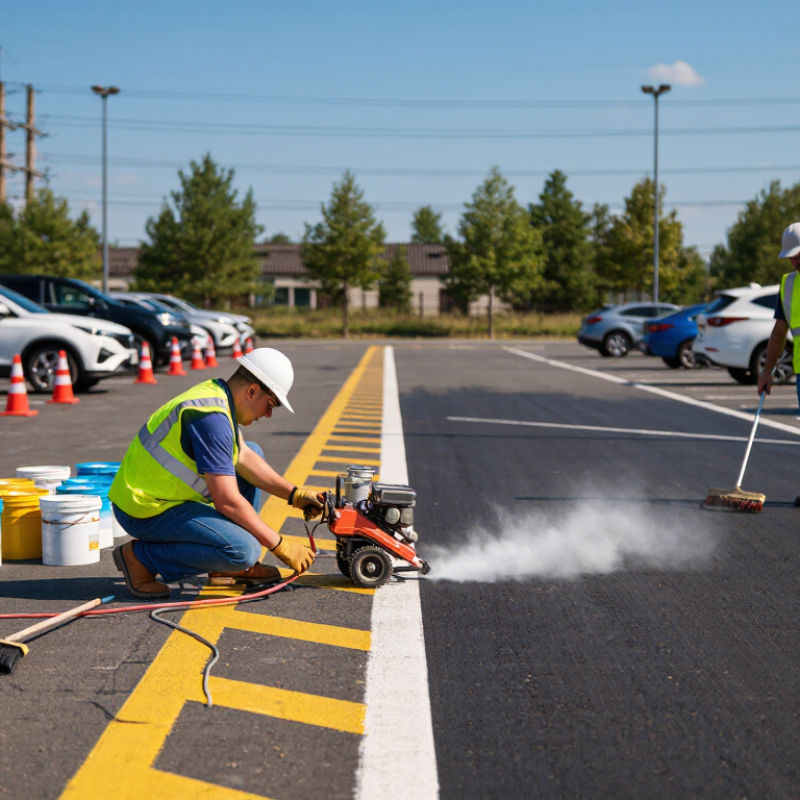
2026 Best Line Striping Paint for Parking Lots?

What Line-Striping Paint Does in a Parking Lot

In a parking lot, striping paint turns open pavement into spaces drivers can read at a glance. It outlines stalls, separates travel lanes, and marks crossings, arrows, and loading areas. Clear lines reduce guesswork when cars enter or back out. They also help pedestrians see where vehicle paths may cross. Small details matter. A faded arrow or narrow-looking stall can confuse people, even when the pavement is otherwise orderly.

Paint performance depends on more than color. Surface preparation, application thickness, weather, and traffic all affect how well markings last. Dust, oil, and loose grit can weaken adhesion, so the pavement needs proper cleaning before application. Different surfaces may also require different preparation. Water-based traffic paint is commonly used for lot markings, while other formulations may suit particular site conditions. Dry to the touch does not always mean ready for heavy traffic. Following the product’s curing guidance helps prevent early scuffing and peeling. Paint cannot fix poor lot design, and it does not guarantee careful driving. Some lines still fade unevenly. Periodic inspections can catch worn edges and broken markings before they become hard to see.

Key Features of High-Performance Striping Paint

High-performance parking lot striping paint should hold a crisp edge, stay visible after repeated tire contact, and bond reliably to the pavement. Look for a formulation suited to the surface, whether asphalt or concrete; the wrong match can peel or wear unevenly. Strong contrast matters, too. White lines should remain easy to distinguish from gray pavement, while yellow markings need consistent color across the lot. Reflective glass beads can improve nighttime visibility when the paint system is designed to accept them.

Drying time affects how quickly a lot can reopen, but a fast-drying label is not the whole story. Temperature, humidity, surface moisture, and application thickness all influence curing. Conditions change everything. Resistance to rain, sunlight, fuel drips, and routine traffic can extend the life of markings, though no paint is maintenance-free. Clean, dry pavement and even application are just as important as the coating itself. A small test area can reveal poor adhesion or an unexpected color before the full layout is painted. It is easy to focus on durability and overlook how the crew will apply the material; that trade-off deserves a second look. Follow the product’s application guidance, and check that its drying window fits the site’s schedule.

2026 Best Line Striping Paint for Parking Lots? Key Features of High-Performance Striping Paint

Planning note: The chart shows the geometric surface area covered by 100 linear feet of stripe at common widths—not a paint coverage estimate. Actual paint use depends on the product, pavement texture, application thickness, and number of coats. When choosing striping paint, compare adhesion, durability, visibility, drying time, and suitability for your pavement and application conditions.

Comparing Water-Based, Solvent-Based, and Traffic Paint

2026 Best Line Striping Paint for Parking Lots?
Comparing Water-Based, Solvent-Based, and Traffic Paint

Water-based paint is often a practical choice for parking lots with moderate traffic. It has lower odor and cleans up with water before drying. Its main weakness is weather sensitivity: cool, damp conditions can slow curing and leave fresh lines vulnerable. On a dry, mild day, it can produce crisp markings with less disruption. Check the product instructions; drying times vary.

Solvent-based paint can dry faster and may suit busy sites where reopening lanes quickly matters. However, fumes, ventilation, surface condition, and local requirements need careful consideration. “Traffic paint” describes paint made for road or pavement markings, not one fixed chemistry. It may be water-based or solvent-based, so compare the actual formulation, expected durability, and application guidance. No option wins everywhere. A shaded, dusty lot may behave differently from clean asphalt in direct sun.

Tips: Sweep away grit and oil, then test a small patch. Look closely at the edges after drying. If they feather or peel, pause and check surface preparation or weather conditions before striping the whole lot. Allow enough curing time before vehicles cross the lines. It is easy to underestimate that wait.

How to Choose Paint for Pavement and Weather Conditions

Choosing line-striping paint starts with the pavement, not the color. Fresh asphalt can contain oils that interfere with adhesion, so check the surface age and the paint’s instructions before marking it. Older, porous asphalt may absorb paint unevenly. Concrete is less forgiving in another way: dust, curing compounds, or moisture can weaken the bond. Clean the surface well, then test a small patch. It may look obvious, but this step is often skipped.

Weather changes application and drying. Most water-based coatings need a dry surface and suitable temperatures; cold air, high humidity, or evening dew can extend drying time. Solvent-based coatings may tolerate some cooler conditions, but ventilation and product-specific precautions still matter. Read the technical data sheet for pavement and air temperature limits, coverage, and traffic-ready time. Touch-dry does not always mean ready for turning tires.

Think about the lot’s daily use, too. A shaded entrance may stay damp longer than an open row, while sun-heated pavement can dry paint quickly. Avoid painting just before rain or when temperatures are falling toward the dew point. Keep a simple weather note for the job. It is not perfect science. Still, it can explain a disappointing stripe later. Check a test line after drying; if edges feather or paint lifts, pause and reassess surface preparation and conditions.

Application, Drying Time, and Long-Term Maintenance

For 2026 parking-lot striping, paint performance starts with the surface. Remove dust, oil, and loose coating, then let damp concrete dry fully; trapped moisture can weaken adhesion. Apply an even, thin coat with a striping machine, keeping the nozzle steady at walking speed. ASTM D711 measures traffic paint’s “no-pick-up” time in minutes, a more useful reopening check than a surface that merely feels dry. Under favorable conditions, a 10–30-minute planning window is common, but temperature, humidity, film thickness, and airflow can extend it. Verify the product’s technical data before reopening the lot.

FHWA’s Pavement Marking Handbook treats marking life as dependent on material, traffic, pavement, and maintenance—not a fixed calendar promise. Inspect high-turn areas, such as tight corners and drive lanes, every few months. Watch for thin edges, tire scuffing, and fading after rain. Repaint only when the pavement is clean and dry; painting over chalky residue is a shortcut that can fail early. I’d also leave a small test stripe first. It may feel fussy, but it can reveal poor adhesion before the whole lot is closed.

Tips: Schedule work during a dry, mild-weather window. Keep vehicles off until the paint passes a gentle shoe test and the stated cure time has elapsed. Log the date, weather, and locations touched up; those notes make the next inspection less guesswork.

2026 Best Line Striping Paint for Parking Lots? - Application, Drying Time, and Long-Term Maintenance

Typical planning ranges only. Actual application rates, drying, traffic reopening, and service life depend on the product instructions, pavement condition, weather, and traffic.
Coating Type Best-Fit Use Application Notes Typical Drying / Reopening Time Indicative Service Life Maintenance Considerations
Waterborne acrylic traffic paint General-purpose marking on asphalt or concrete where fast cleanup and lower solvent emissions are priorities. Apply to clean, dry pavement within the specified temperature range. Commonly applied by airless striping machine; some formulations allow brush or roller use for small areas. Often touch-dry in about 10–30 minutes in favorable conditions. Allow roughly 30–60 minutes or longer before traffic, following the product label and site conditions. Approximately 1–2 years in many parking-lot settings; heavy turning and braking can shorten this. Inspect high-wear areas regularly and recoat when lines become difficult to distinguish. Avoid application before rain or when the pavement is damp.
Solventborne traffic paint Projects needing a relatively quick-drying coating, where local rules permit its use. Typically applied with compatible striping equipment. Check surface compatibility, ventilation, fire-safety requirements, and local VOC restrictions before use. May become touch-dry in roughly 5–20 minutes; reopening commonly takes 30–60 minutes or more, depending on film thickness and weather. Often around 1–3 years, with substantial variation by formulation, pavement, and traffic. Check local environmental requirements and use suitable protective equipment. Clean equipment with the solvent specified by the coating manufacturer.
Two-component epoxy marking coating High-wear areas, such as loading zones or frequently used aisles, when a tougher film is needed and a longer closure is workable. Mix the components in the specified ratio and observe the limited pot life. Careful surface preparation is important; confirm suitability for the pavement and any sealer present. Usually requires several hours before vehicle traffic; full cure can take longer. Temperature and mixing accuracy strongly affect cure time. Approximately 2–5 years in suitable conditions; this is not a guarantee and depends on traffic and surface preparation. Inspect for chipping, loss of adhesion, or fading. Follow the specified mixing, application, and cure schedule; partial kits should only be measured if the instructions allow it.
Two-component polyurea marking coating Sites where rapid return to service and durable markings are priorities, particularly when trained crews and suitable equipment are available. Often applied with specialized proportioning or spray equipment. Follow surface-moisture limits, component-handling precautions, and the specified application procedure. Some systems permit traffic in minutes to about an hour; the exact interval is product- and condition-specific. Confirm reopening time from the technical data sheet. Often planned for roughly 2–5 years, depending on system, pavement condition, and traffic intensity. Check markings after installation and during routine lot inspections. Repair damaged areas using a compatible system and the prescribed surface preparation.
Preformed thermoplastic marking Durable symbols, legends, and selected line markings where heat application is practical. This is a marking material, not conventional liquid paint. Install on a suitable, dry surface using the specified heating method and safety controls. Adhesion depends on proper surface preparation and installation temperature. Typically reopened after the material has cooled and bonded, often within minutes; follow the installation instructions and verify the surface is safe for traffic. Can last several years in appropriate applications; wear varies greatly with turning movements, snow removal, and pavement condition. Inspect edges for lifting and check high-wear locations. Use compatible repair material and installation methods rather than simply painting over loose material.

Selection tip: For most routine parking-lot restriping, waterborne acrylic is a practical starting point. Consider a two-component system for demanding wear areas, and compare total closure time, pavement compatibility, local regulations, and maintenance needs before choosing.

FAQS

What is the difference between water-based, solvent-based, and traffic paint?

Water-based paint has lower odor and cleans up with water before drying. Solvent-based paint may dry faster. Traffic paint describes pavement-marking paint, not one fixed formula.

Which paint works best for a busy parking lot?

Solvent-based paint may help reopen lanes sooner, but check ventilation, surface conditions, and product instructions. No paint suits every lot.

When is water-based paint a practical choice?

It can work well on a dry, mild day in a lot with moderate traffic. Cool, damp weather may slow curing and leave fresh lines vulnerable.

How should pavement be prepared before striping?

Sweep away grit, dust, oil, and loose coating. Let damp concrete dry fully. Fresh asphalt may contain oils that affect adhesion.

How does weather affect drying time?

Cold air, high humidity, evening dew, and falling temperatures can extend drying. Sun and airflow may help, though conditions vary across one lot.

How long should vehicles stay off fresh paint?

Follow the product’s stated traffic-ready time. A 10–30-minute planning window may apply in favorable conditions, but it is not a guarantee.

How can I check whether the paint will adhere?

Apply a small test patch and inspect its edges after drying. If it feathers or lifts, pause and reassess the surface or weather. A small test helps.

How often should parking-lot lines be inspected?

Check tight corners and drive lanes every few months. Look for thin edges, tire scuffs, and fading after rain.

What should I record after repainting?

Note the date, weather, and areas touched up. The record will not explain everything, but it can make the next inspection less guesswork.

Conclusion

Choosing the best line striping paint for a parking lot in 2026 starts with understanding its purpose: clear, durable markings guide traffic, define parking spaces, and improve visibility. High-performance paint should provide strong color contrast, adhere well to pavement, resist wear from vehicles, and remain visible through changing weather. The right option depends on the surface and local conditions, since asphalt and concrete can differ in texture and porosity, while heat, rain, and cold affect how coatings perform.

Water-based paint is often valued for easier cleanup and lower odor, while solvent-based products may suit some demanding conditions. Traffic paint is formulated specifically for road and parking markings, but suitability varies by surface and application needs. Before painting, prepare the pavement and follow the product’s application and drying guidance to help prevent smearing or premature wear. Regular inspections and timely touch-ups can keep markings clear and extend their useful life.

Charlotte

Charlotte

Charlotte is a seasoned marketing professional with a deep understanding of the company's portfolio and a passion for elevating its presence in the market. With a keen eye for detail and a commitment to excellence, she ensures that our professional blog is regularly updated with insightful articles......